
 Impervious surfaces, or areas that do not allow water to absorb into the ground, blanket a large portion of urban Los Angeles. Most of us only have to look as far as our driveways to find a concrete, asphalt or brick surface that is impervious. While surfaces of this sort are useful in controlling flooding, they are detrimental to groundwater supplies and hazardous to the health of our water bodies. That's because when rain hits an impervious surface, it runs right off, flows into our streets and picks up most everything in its path like oil residue or trash before it flows into storm drains and straight to our creeks, rivers and ocean.
The answer to this problem is simple – change impervious areas to pervious surfaces that allow water to soak into the ground. Although we don't have much control over the types of materials used in the construction of roads, we do have control over our own driveway's surface. The options available to homeowners looking to create a more eco-friendly driveway are as diverse as the communities here in southern California. If you're looking for a home improvement project this spring, consider the road less traveled - installing a green driveway that will improve both your property and our planet.
Note: The description of green surfaces below is only a listing of choices available to homeowners. LA Stormwater has not used or tested any of the products. We are providing this listing only as a compilation of our research and not as an explicit endorsement of these products. If you have experience using the products listed below, please let us know your thoughts and comments.
Pervious Concrete = ‘Green’ Concrete
Pervious concrete is one of the most effective means of converting your driveway into a surface that absorbs water but still allows your driveway to look, well, like a concrete driveway. There are many types of porous concrete that are perfect for the job. It all depends on the style you want. Any style, even bricks, can be created with pervious concrete in a way that helps reduce runoff from your driveway. On the surface, porous pavement may not look any different, but close inspection will reveal small holes or slits that help the water to absorb into the ground. You can get your feet wet by checking out this permeable concrete video demo. For information about pervious pavement in general, here's a little fresh dirt from a homeowner who regrets not using ‘green’ concrete.

A Country Lane in the CityThe easiest and perhaps most common method of creating a green driveway is to create two parallel narrow strips (made of bricks or concrete, for example) for tires and plant native grasses or other plants in between. Think modern country lane in the city! Depending on what you want, your budget and your willingness to do a little work, you can either hire a professional or do it yourself.
If it Ain’t Broke …
Perhaps a porous concrete surface or a modern-styled country road isn't in your plans. Permeable pavers with native grasses planted in between are another great option. Pavers vary in design as well as cost and many have lifetime warranties. For a cost comparison on permeable pavers, check out this great page. Don't want grass on your driveway? Not a problem. Gravel, wood chips or other materials placed in between the concrete squares will also allow water to infiltrate. You must have seen examples around town of eco-friendly driveways or parking lots with pavers and permeable material in between. Pavers actually date all the way back to Roman times, so really this isn't a new concept. Like the old adage says, "If it ain't broke..."

Amass the Grass!
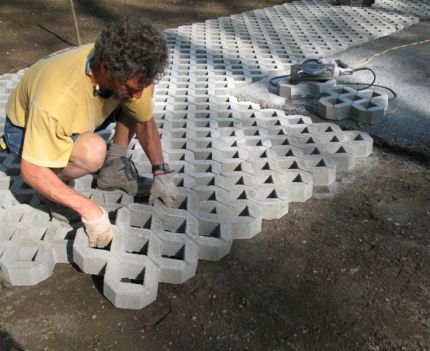
Replacing your driveway has never been so green. Literally. Driveable grasses may be another option you can consider - guaranteed no mud and no watering. Pre-fabricated panels, manufactured in a variety of materials from plastic to concrete, are laid on your driveway. Once the interlocking pieces are in place, native grasses are sown in between. To read about a Do-It-Yourselfer couple in Canada who created a green driveway over a three-day weekend, visit frankejames.com.
Options Galore
There are even more ideas for innovative and inexpensive types of permeable surfaces out there for you. Saying goodbye to puddles (and storm water pollution) never looked so fashionable, and you’ll impress your neighbors with your forward-thinking approach to home improvement. Take a peek at Landscape Online's permeable surfaces page to broaden your horizons. You can also review the Chicago Green Alley Handbook for a helpful overview on the different options for making your home more water sustainable (pg 24-34). For a detailed, technical look at porous pavement, check out LA County's LID Manual (pg 53-57). Also check out the City's Green Streets Manual, which is full of useful information about permeable pavement (pg 8-12).
Still thirsty for more? HowStuffWorks offers an explanation of green pavement.
If you care about protecting our water quality and are looking to do some home retrofits in the near future, installing permeable surfaces around your home may be something to place on your springtime agenda. As with any home improvement project, it’s always a good idea to check with the City of Los Angeles Department of Building and Safety first before moving forward with a major improvement project. We encourage you to call (866) 452-2489 or visit www.ladbs.org for more information.
We're curious to hear what type of experience you've had with any of these materials. Please reply to this post with your comments.
Click here to view all of the articles in Issue 10 of the LA Stormwater newsletter.
*Country Lane photo courtesy of TheChicEgologist.com.


 Posts
Posts


.jpg)